
Measure your true age
Biological Age Test
Chronological age tells half the story. Bio-Age reveals how old your cells, organs, and aging mechanisms truly are — so you know whether your body is aging faster or slower than it should.
Why know your Bio-Age
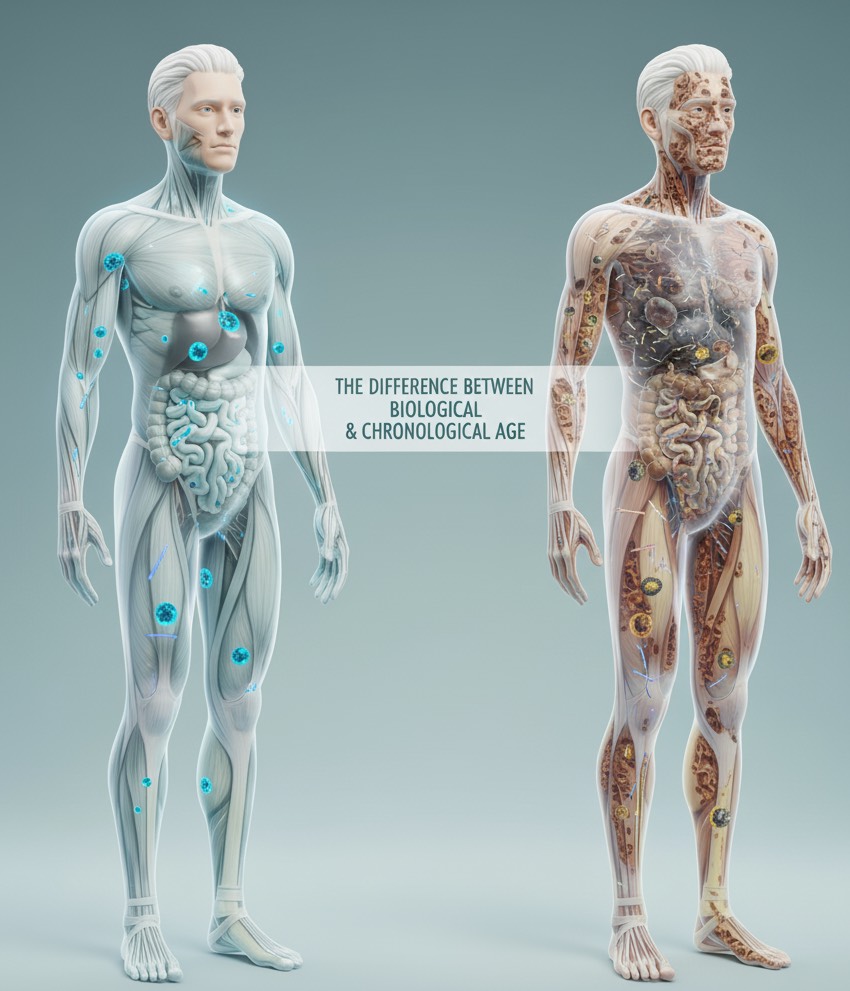
Biological Age measures how "old" your cells and organs really are, regardless of your calendar age. A 45-year-old may have a Bio-Age of 38 — or 52 — depending on genetics, lifestyle, and environment. Knowing your Bio-Age gives you a starting point, helps you track the impact of treatments, and measures whether lifestyle changes or regenerative therapies are actually working.
How we measure Bio-Age
Epigenetic / DNA Methylation
Measures age at the DNA level with a methylation clock — the gold standard for biological age. Analyzes methyl group patterns on your DNA to determine cellular age with precision.
- Most accurate method available
- Results in 3–4 weeks
- Track and compare every 6–12 months
Telomere Length Analysis
Measures the length of your telomeres — chromosome caps that shorten with every cell division. Shorter telomeres indicate greater cellular aging, reflecting cumulative wear over a lifetime.
- Reflects cumulative cellular aging
- Results in 2 weeks
- Compared to age-matched reference
Glycan Age (GlycanAge)
Measures age via glycan patterns on immunoglobulins — reflecting immune system health and chronic inflammation levels. Responds to lifestyle changes faster than other biological age markers.
- Molecular immune readout
- Responds quickly to lifestyle changes
- Pairs well with Epigenetic testing
The process
Choose a test or combo with your physician
Blood draw at the clinic
Results in 2–4 weeks
Physician review, analysis, and personalized health plan

Physician-Led Care
Your results reviewed with a physician, not just a printout
Your Bio-Age results are reviewed in a personal consultation with Dr. Pattanawadee Uttawichai, who translates the data into a concrete health plan.
Meet our doctor →Frequently Asked Questions
What is the difference between biological age and chronological age?
Chronological age is time since birth. Biological age estimates how your cells, tissues, and organ systems are aging based on biomarkers, DNA methylation patterns, and physiological measurements. Two people born the same year can have biological ages that differ by a decade or more.
Which biological age test should I choose?
BIOAGE (฿15,000) provides a solid baseline with longevity scoring and peer comparison. GENFOSIS adds genetic predisposition insights. EPISPAN (฿30,000–฿35,000) is the most advanced option, analyzing DNA methylation across 11 organ systems and measuring the actual pace at which you are aging.
How often should I test my biological age?
We recommend testing at baseline, then retesting every 6–12 months to track the impact of lifestyle changes, treatments, and longevity interventions over time.
Can biological age improve?
Yes. Research shows that biological age can improve with targeted interventions — nutrition, exercise, sleep optimization, stress management, and regenerative medicine. ARPAR designs protocols specifically aimed at reducing biological age markers.